Boqilang (Shanghai) Technology Development Co., Ltd
Address: 300 Songying Road, Qingpu District, Shanghai
Mr. Liu: 13818020450
Mr. Zhao: 13681948693
1、 Key technology implementation path
To achieve efficient and pressure resistant fully automatic packing, multiple technologies need to be coordinated:
1. Optimization design of mechanical structure
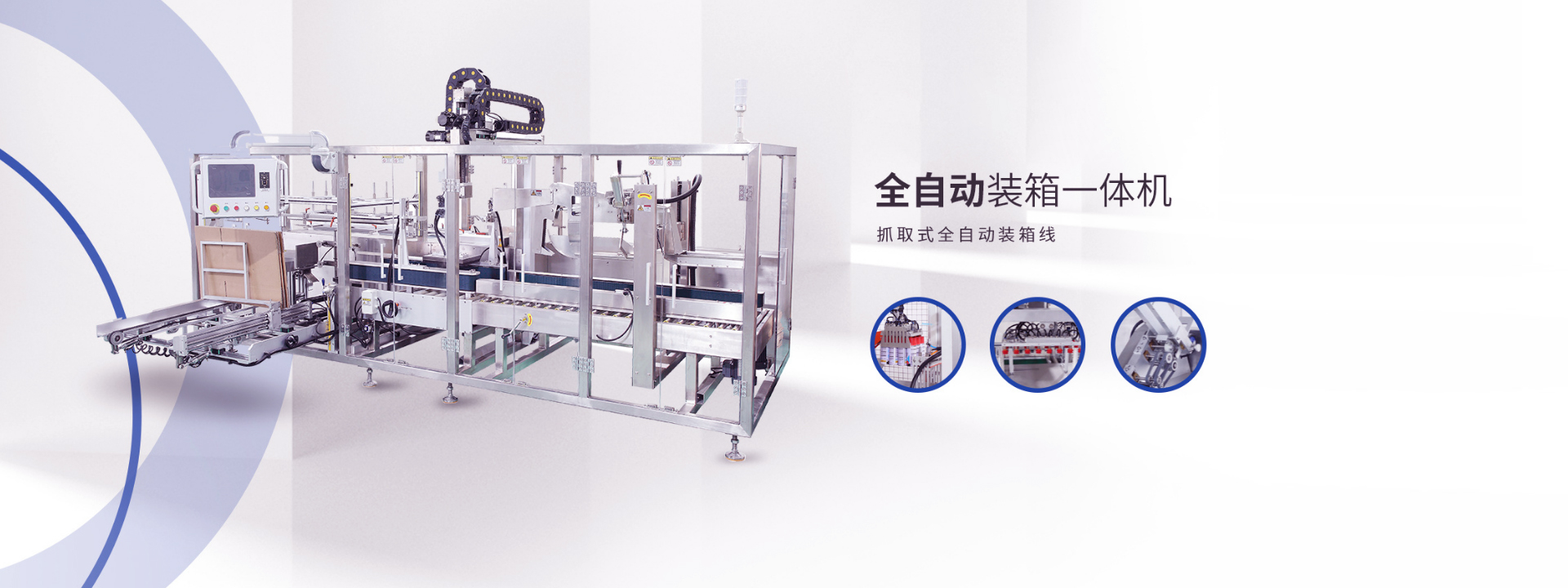
The mechanical structure of the anti pressure packaging machine requires special design. Adopting lightweight materials to reduce the weight of moving parts and minimize inertial impact; Use harmonic reducers or torque motors to achieve direct drive and eliminate transmission clearances; Optimize the motion trajectory planning algorithm to ensure smooth and continuous movements of the robotic arm. The box forming mechanism adopts progressive bending technology to avoid lateral pressure on the already loaded products.
2. Multi sensor fusion technology
A single sensor often struggles to comprehensively monitor complex packaging processes. Modern systems integrate various sensing devices such as pressure sensors, force sensors, proximity sensors, and visual sensors, and build comprehensive environmental perception capabilities through data fusion algorithms. For example, by combining 3D visual and tactile feedback, the system can accurately determine the actual state of the product inside the box and adjust the filling strategy in a timely manner.
3. Dynamic compensation control
Advanced packing machines adopt feedforward compensation control technology to address the dynamic effects generated by high-speed motion. By establishing an accurate dynamic model, the possible inertial forces generated by the movement of the robotic arm can be predicted, and compensation quantities can be added in advance in the control instructions. This active compensation method responds faster than traditional feedback control and is particularly suitable for handling sudden disturbances.
4. Intelligent filling algorithm
The packing of fragile items is not just a simple spatial arrangement, but also requires consideration of dynamic protection during transportation. Intelligent algorithms will automatically calculate the arrangement and distribution of cushioning materials based on product characteristics, ensuring that each product has appropriate constraints and cushioning space inside the box. Some systems can also simulate transportation vibration environments to verify the reliability of packaging solutions.
Evaluation of Technical Application Effectiveness
Practical application has shown that the fully automatic packing machine using the above-mentioned anti pressure injury technology can significantly reduce the packaging damage rate of fragile items. In the glass bottle packaging production line, the damage rate of traditional machinery is usually between 0.5% and 1%, while the packing machine equipped with advanced anti pressure injury system can reduce this number to below 0.1%. For high-value precision instrument packaging, anti compression technology avoids huge quality claims caused by improper packaging.
From the perspective of production efficiency, anti crushing technology not only does not reduce the packing speed, but also reduces rework time by increasing the success rate once. According to data from a ceramic tableware production line, the use of intelligent anti pressure packaging machines has increased overall packaging efficiency by 15%, while reducing packaging material consumption by 20%.
2、 Challenges and Requirements of Fragile Packaging
Fragile packaging is an important issue in industrial production, covering multiple fields such as glass products, ceramic vessels, precision instruments, electronic products, etc. These products face severe mechanical shock and pressure challenges during transportation and storage, and traditional packaging methods often struggle to completely avoid product damage. With the popularization of automation technology, fully automatic packing machines have become an important component of modern production lines. However, how to ensure that these high-speed machines do not cause pressure damage to fragile products has become an urgent technical problem to be solved in the field of packaging engineering.
Fragile items require special requirements for packaging machinery: firstly, precise control of the clamping force of the robotic arm is necessary; secondly, the stability of the product during transportation must be ensured; and thirdly, the sealing process must not exert additional pressure on the product. These requirements have prompted packaging machinery manufacturers to continuously develop new anti crush technologies to meet the growing demand for high-quality packaging.
3、 Principle of anti pressure injury technology for fully automatic packing machine
The anti pressure injury technology of modern fully automatic packing machines is mainly based on the following core principles:
1. Intelligent pressure sensing system: Real time monitoring of contact pressure with the product through high-precision pressure sensors distributed at the clamping parts of the robotic arm. When the pressure approaches the preset safety threshold, the system will automatically adjust the action of the robotic arm to ensure that it does not cause excessive squeezing of the product. Advanced sensing systems can detect pressure changes at the level of microcows, providing millimeter level protection accuracy for fragile items.
2. Adaptive control algorithm: Using machine learning algorithms, the packing machine can automatically adjust operating parameters according to the characteristics of different products. The system continuously learns the compressive performance of different products, establishes personalized packaging strategies, and achieves precise protection of "one item, one policy". This adaptive ability is particularly suitable for handling fragile products with irregular shapes or special materials.
3. Visual guidance positioning technology: High resolution industrial cameras are combined with image processing software to achieve precise recognition of product position and posture. This technology not only improves grasping accuracy, but also avoids mechanical collisions or squeezing caused by positioning errors. The 3D vision system can even identify fragile parts of the product and guide the robotic arm to avoid these areas for grasping.
4. Pneumatic buffer device: Install pneumatic buffer components at critical contact points to absorb mechanical vibration and impact energy through an adjustable pneumatic system. This passive protection measure complements the active control system, providing dual protection for fragile items. Some high-end models also use magnetorheological damping technology to achieve millisecond level dynamic stiffness adjustment.